Random walk or diffusion models have been successful at predicting human decision making and guiding experiments. Here’s why. In my last post I described two…
Predicting Human Behavior with Diffusion Models


Random walk or diffusion models have been successful at predicting human decision making and guiding experiments. Here’s why. In my last post I described two…
The discoveries of exosomes and tunneling nanotubes that allow intercellular transport of proteins, RNA and DNA among neurons and glia change how we think about…

Humans operate within a social context. The study of social synchronization or ‘hyperscanning’ using EEG is beginning to reveal insight into human interactions. Humans are…
The theory of evolution and the Hodgkin-Huxley model of the action potential are two successful theories in biology that are relevant to the brain. Why…
How do the average and infinity references in EEG compare, and what are other reference free approaches? In the previous blogpost, we looked at how…
What are the necessary elements for a genuine theory of the brain and what will it take to construct one? In my previous posts I…
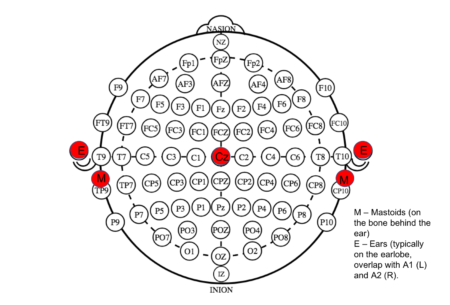
In EEG, voltages recorded at each electrode are computed with reference to another electrode. The choice of this electrode reference impacts a number of EEG measures….

Little is known about the developmental trajectory of the brain through adolescence but a few studies suggest there is large inter-person variability and differences that…
Many theoretical proposals in neuroscience are presented in the form of an engineering solution. But engineering a solution is a different process than creating a…

Much of neuroscience rests on certain critical unproven assumptions that if wrong, could collapse much of the field as we know it today. There are…